A Thoughtful Guide to Becoming a Video Editor
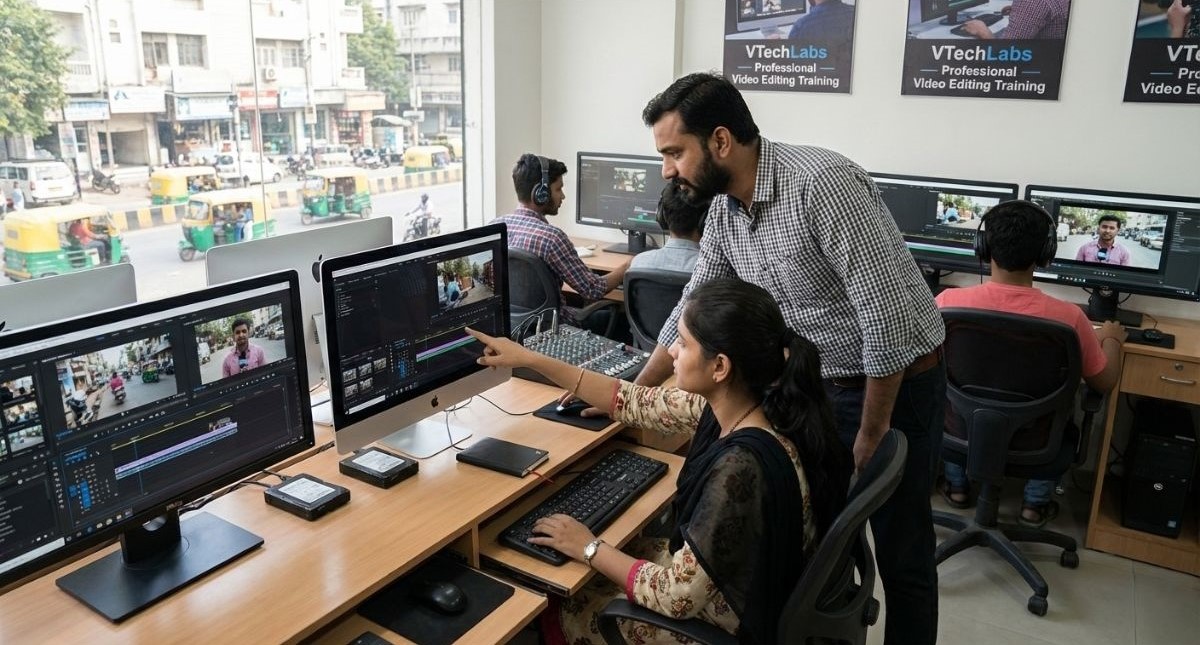
Interest in video editing has grown tremendously over the past decade. It is mainly driven by the expansion of streaming platforms, digital media, and content-led marketing. Earlier, video editing was considered a niche. But today, this behind-the-scenes role has transformed into a core creative profession in social media, advertising, education, television, and film. It holds a central position in shaping, understanding, and remembering the stories.
For those who consider video editing as a career, the path forward may feel unclear. Understanding how to become a video editor is often less about following a single academic or professional route and more about navigating the wide range of tools, tutorials, and training options available today. With so many ways to learn, knowing where to begin can be challenging. This guide offers clarity by explaining what video editors do, how people learn the craft, and the practical steps involved in building a strong career, while avoiding unrealistic promises or quick wins.
Understanding the Role of a Video Editor
At its foundation, what is editing video if not the process of transforming raw visual and audio material into a cohesive final product? But this description only focuses on part of the role. Editing is not just technical assembly. It is an interpretive process that decides emphasis, pacing, tone, and narrative clarity skills that are often developed through hands-on experience or a structured video editing course.
Video editors often work with uneven, incomplete, or ambiguous footage. Their main responsibility is to organize that material in a way that perfectly aligns with the intent of the project (intent can be to inform, persuade, document, or just entertain). This process certainly requires both creative judgment and methodical precision.
Frequently, editors collaborate with producers, marketers, directors, and content creators. In many cases, they have to either make independent decisions influencing the final outcome, or they are given detailed instructions. Eventually, strong communication skills and a complete understanding of audience expectations are important.
While many editors choose to work primarily in post-production, their influence may extend earlier into the creative process. They need to review scripts, advise on visual continuity, and plan short lists. All fall within their scope, particularly in freelance environments or small teams.
What Video Editors Do on a Day-to-Day Basis
The everyday work of a video editor depends on experience level, industry, and employment type. Most editing roles involve a consistent set of core responsibilities.
Editors may begin by organizing or reviewing footage. They ensure files are properly labeled and accessible. Often, this is an iterative stage with multiple revisions needed to refine timing, emphasis, and transitions.
Beyond cutting footage, editors manage audio quality. They focus on syncing dialogues, balancing sound levels, and also adding music or sound effects. Even visual elements such as color correction or motion elements may also be part of the workflow. The actual role, however, depends on the project scope.
Importantly, editing decisions are rarely made in isolation. The routine part of the process includes feedback from directors, clients, or internal stakeholders. One should learn how to understand and respond to feedback constructively for real development.
What Tools and Software are Used by Professional Video Editors?
Well, video editing heavily relies on specialized software that handles large media files, along with complex timelines. Undoubtedly, there are many tools available. But only a few of them dominate professional environments.
- Adobe Premiere Pro is used in many industries. The main reasons include the flexibility and integration with other Adobe applications.
- Final Cut Pro is popular too among Mac-based editors, especially in independent production settings.
- Avid Media Composer is commonly used in film and broadcast workflows (this is where collaboration and media management are both critical).
In addition to such primary editing software, some editors may also use complementary tools. After Effects is often used for motion graphics and compositing. Audio tools, on the other hand, such as Adobe Audition, support more advanced sound work.
Hardware is equally important. Editing requires a system that is capable of handling high-resolution video without performance issues. Many things contribute to an efficient workflow, such as processing power, adequate RAM, storage, and a reliable internet connection. Even though beginners may start with modest setups, professionals can quickly learn that technical limitations may hinder learning as well as productivity.
Approaches and Considerations to Learn Video Editing
There probably is not a single educational requirement to become a video editor. People often enter this field through various paths, like short courses, self-study, formal degree programs, and professional training institutes offering a video editing certification course.
One of the excellent ways to gain initial exposure is self-directed learning. But even this approach has some limitations, like isolated techniques that lack structured skill development. Under this approach, learners often struggle to understand how individual tools align with a complete editing workflow.
There is a dire need for a more structured learning environment (certificate programs, intensive training courses, etc.). The idea here is learning focused on progression. These programs teach concepts in a logical sequence. If you are serious about pursuing video editing professionally, you should first consider how effectively the learning translates into your real capability.
Key Steps to Becoming a Video Editor
Clarify your career direction
Before you invest money and time in training, you should define what kind of video editing work you want to pursue. You may consider editing for feature films; this requires different skills and expectations than editing for social media or corporate content. Understand these distinctions for better learning decisions. Review job descriptions and study industry trends. Also, analyze the work of established editors.
Choose appropriate software and tools
Once a general direction is established, you need to choose which tools to learn. Instead of mastering multiple platforms at once, most aspiring editors will benefit from focusing on one primary editing application. They will then build depth before expanding their skill set. This should align with industry relevance rather than personal preference alone.
Develop core editing skills
Remember, learning software is just part of the process. Editors should develop a complete understanding of storytelling, visual rhythm, color theory and sound design. These foundational skills can be transferred across tools. They remain relevant throughout a career. Learners benefit tremendously from projects that stimulate real editing scenarios.
Build a practical scenario
You can gain experience through refinement and repetition by completing personal, collaborative, or client-based projects. This will help you encounter common challenges and learn how to solve them smartly.
Create a portfolio
Your portfolio is solid proof of your ability, and hence, it should show consistency and clarity. Strong portfolios showcase your thoughtful editing decisions. Make sure you keep evolving your portfolio as your skills mature.
Career Paths
Video editors can work as freelancers, in-house professionals, or as part of production teams across industries. These video editing career opportunities offer different advantages—freelancing provides flexibility and creative independence, while full-time roles bring stability and structured collaboration within larger teams.
Entry-level positions involve assisting senior editors or managing defined portions of a project. With your experience deepening, you can gain more creative responsibilities that affect final outputs. Remember, career progression is associated with specialization. You need to develop expertise in specific formats or industries.
The demand for video content is known to everyone. It is only increasing. Organizations across various sectors rely greatly on video to communicate ideas and engage the audience. Skilled editors remain absolutely essential.
But what sustains long-term success in this field is adaptability and technical proficiency. Editors must continue learning and refine judgment.
Make Transition
Consider training programs that focus on hands-on projects and structured workflows. Some IT training institutes provide not only instruction but context and thus help learners understand how editing functions within real production environments.
For those who seek a career-focused and practical learning path, there are professional training options such as IT classes in Vadodara offered by institutes like VTechLabs can provide structured guidance. The value of such programs lies not just in certification but in how effectively they prepare learners for real editing challenges.
Becoming a video editor is not about mastering every tool or adhering to a rigid formula but about developing consistency and judgment. Also, the ability to translate ideas into visual form with thoughtful planning and the right learning environment has a role to play.
Video editing can be a stable and creative profession for you. The field certainly offers meaningful, long-term opportunities. Join VTechLabs’ comprehensive and advanced video editing certification course. Learn video editing in Vadodara!
back to blog