Know About Serverless Architecture With AWS: Build Faster & Scale Smarter
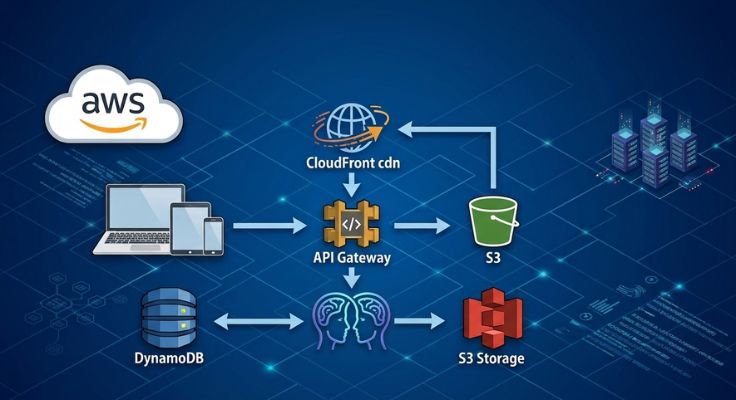
Modern apps need to be fast, flexible, and cheap. When teams need to conduct frequent maintenance and scaling, traditional server administration can slow them down. This is where serverless computing really makes a difference. It lets developers write code instead of having to deal with infrastructure.
When you look at what is serverless architecture in AWS, you find a paradigm where cloud services automatically take care of provisioning, scaling, and maintenance. You simply pay for what you use, which is great for both new businesses and big companies. This method stimulates new ideas without putting too much work on people.
What Is the Architecture of a Serverless System?
In serverless architecture, the cloud provider dynamically maintains servers. The platform takes care of running the functions that developers build and put on the platform. Even if servers are still there, you do not have to manage them yourself.
In this architecture, applications are split up into smaller, separate parts. These functions only work when something happens. This might be a request via HTTP, an upload of a file, or an update to a database. Because they are event-driven, apps are very fast and responsive.
AWS has a number of services that work with this design. AWS Lambda, Amazon API Gateway, and Amazon DynamoDB are some of the most popular ones. They all work together to provide a strong environment for making apps that can grow.
Why Companies Are Going Serverless?
There are definite benefits to moving to serverless. Companies strive to save expenses and speed up the development process. Both aims may be fulfilled with serverless architecture. Without having to worry about infrastructure, developers can deliver code more quickly. Teams may spend less time getting ready and more time coming up with new ideas.
This makes it possible to deliver products more quickly and provide users with a better experience. Scalability is also very important. Applications can manage abrupt increases in traffic without any help from people. This makes sure that performance stays the same even when utilization is at its highest.
Things You Can Expect
If you know what the benefits of serverless architecture are, you’ll understand why it’s so popular. Cost-effectiveness is one of the best things about it. You only pay when your code runs, so you don’t have to pay for servers that are not being used.
Automatic scaling is another feature. AWS changes resources in real time depending on demand. This means you don’t have to make scaling choices by yourself.
Serverless also makes things more reliable. AWS services are designed to be fault-tolerant from the start. This makes sure that things are always available without having to set them up in a complicated way.
Another good thing about it is security. AWS has built-in security features, including encryption and identity management. AWS takes care of the security of the infrastructure, so developers can concentrate on the logic of the application.
Examples from The Real World That Inspire
There are a lot of real-world serverless architecture examples that illustrate how powerful it is. Building web apps is a popular use case. Developers utilize API Gateway and AWS Lambda to quickly process user requests. Processing files is another example. A Lambda function may run when a file is uploaded to Amazon S3. This function can quickly resize photos, analyses data, or make reports.
People also use serverless a lot for processing data in real time. Event-driven systems can look at flowing data and act fast. This is helpful for things like fraud detection and monitoring systems. Serverless technologies are also used by chatbots and voice assistants. They take in user input and provide back answers right away. This makes the user experience seamless and interesting.
Development Becomes Faster and Cleaner
Serverless design makes it easier to work on development. Instead of working on big codebases, developers may concentrate on tiny, focused functions. This makes the code better and cuts down on mistakes.
It also becomes easy to test. You may try each function on its own. This helps teams find problems fast and address them without breaking the whole system.
Also, deployment goes quicker. It’s easy to connect continuous integration and continuous delivery pipelines. This gives teams the confidence to make updates often.
Keeping Costs Down Without Making Things Hard
It’s typically hard to keep expenditures under control with conventional systems. Serverless changes this by letting you pay for what you use. You only pay for the time it takes to run your functions.
This makes it easier to plan your budget. Companies may grow without having to worry about unanticipated expenses for infrastructure. This is particularly helpful for apps that get traffic in ways that are hard to anticipate.
Amazon CloudWatch is one of the monitoring tools that AWS offers. These tools let you keep track of how much you are using and improve performance. This makes sure you get the most for your money.
Things to Consider
Serverless has numerous advantages, but it is also crucial to know what it can’t do. One problem is the delay that happens when you start anything cold. If you don’t utilize a function often, it could take a little while to start.
Vendor lock-in is another thing to think about. Moving to a different platform might be hard since the architecture depends so much on AWS services. This danger is lower when you prepare beforehand.
Debugging may also be different from how it works in other systems. Because functions are spread out, keeping track of problems may need specialized monitoring technologies. But AWS gives you a lot of help to deal with these problems.
Best Ways to Succeed
Follow some important rules to get the most out of serverless. Make sure that functions are short and to the point. This helps things run better and makes it simpler to fix bugs. Whenever you can, use managed services. Several AWS services work nicely with serverless apps. This makes development easier and makes things more reliable.
Check performance on a frequent basis. CloudWatch and AWS X-Ray are two tools that may help you understand how your system works. This helps your application keep becoming better. Safety should always come first. Use the right ways to authenticate and provide permission. AWS Identity and Access Management is a great way to manage who can get in.
The Future of Cloud Development
The future of app development is being shaped by serverless architecture. It fits with how contemporary enterprises need to be quick and efficient. Serverless solutions will become better as cloud technology gets better.
AWS is coming up with new ideas and adding new features. This makes it easy for developers to construct complicated software without having to deal with a lot of issues. The ecosystem is expanding at an unprecedented rate, offering an infinite number of opportunities.
Students and professionals interested in cloud computing can explore IT courses for beginners in Vadodara to gain hands-on experience in AWS and serverless technologies.
In Conclusion
AWS’s serverless architecture is a better approach to creating and growing apps. It takes care of server administration so that teams may concentrate on coming up with new ideas. It’s changing the way contemporary apps are made since it’s cheap, easy to use, and can grow with your needs.
You can get the most out of it by learning its basic ideas and best practices. Serverless is a great option for both establishing a startup product and expanding an enterprise solution.
back to blog